Search “Aztec death whistle for sale” and you get hundreds of near-identical listings: the same skull, the same “loudest ever” promise, prices from about $11 to over $100. Some of them scream. Some puff out a thin, polite chirp. This guide helps you tell them apart before you pay.
We are ADW, and we sell one product: a replica of the Aztec skull whistle. We list it below with its real facts, next to the other places you can buy one. Prices were checked on September 30, 2026; marketplace prices change daily, so treat them as a snapshot.
Short answer: you can buy an Aztec death whistle on Amazon, Etsy and eBay, from specialist shops such as Vat19 ($39.99), or print one from a free file. Expect roughly $12 to $45 for most replicas and $75 or more for handmade clay pieces by named makers. Ordering for Halloween? Check the delivery date before you pay. Our own replica is $34.99 with tracked US shipping in 7 to 13 days; order by October 17 for delivery before October 31.
What you are actually buying
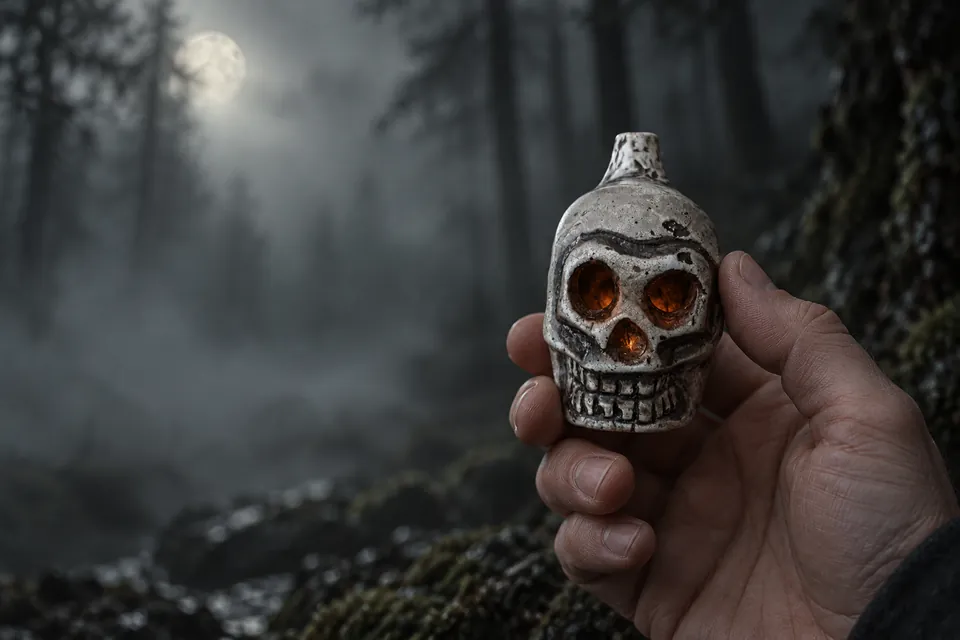
The death whistle is a skull-shaped whistle from Mesoamerica. The best-known examples were excavated at the temple of Ehécatl, the wind god, in Tlatelolco, Mexico City, found with the skeleton of a sacrificed man (Wikipedia). The 2024 University of Zurich study dates that excavation to the late 1980s. The skull shape may represent Mictlantecuhtli, lord of the underworld (University of Zurich, 2024).
So every Aztec death whistle for sale today is a replica. The originals are archaeological finds; the Zurich team worked from originals held at the Ethnological Museum in Berlin. A listing calling a new whistle “authentic” means authentic-looking, nothing more.
For the full story, our history of the Aztec death whistle covers the dig, the gods and the leading theories. Here, the job is simpler: helping you buy well.
The chamber matters more than the label
If you remember one thing from this page, remember this: the scream lives in the chamber.
The death whistle is an “air spring” whistle: your breath runs into a pocket of air trapped inside a chamber, and the collision distorts the sound (Mexicolore). The Zurich researchers made 3D reconstructions of original whistles and found two opposing chambers that create air turbulence, the source of the screech. Listeners in their study rated the sound as extremely frightening and often heard it as partly human, like a scream (Frühholz et al., Communications Psychology, 2024).
That is why material alone does not decide the sound. The originals were ceramic, and handmade clay replicas exist, but a well-designed resin or 3D printed whistle can scream too, and a badly designed clay one can’t. Judge the sound, not the label. For what that sound should be, see our Aztec death whistle sound guide.
What to look for in a quality replica
When you have a listing open and you are deciding whether to buy, run through this checklist:
- A real sound demo of the exact product. A true death whistle sound is harsh and layered, not a clean note. No demo is a warning sign.
- Material stated plainly. “Clay,” “ceramic,” “resin,” “PLA”: any honest answer is fine. A blank or vague answer is not.
- Size. Larger reproductions are the ones known for the loudest shrieks (Wikipedia). A listing should give dimensions.
- Tracking, a delivery window and a returns policy. Ask before you buy if you can’t find them.
- Reviews that describe the sound. Look for buyers who say it “screams” or “sounds like a person.” Reviews about shipping speed tell you nothing about the sound.
- Instructions. The technique (a slow, sustained breath) is not obvious. Sellers who explain it cut down the “it doesn’t work” complaints.
Tick most of these and you are likely looking at a good replica. Miss several and keep scrolling.
Red flags when buying an Aztec death whistle
The market is crowded with near-identical listings, and the weak ones share a recognizable profile:
- A giant decibel number as the main selling point. Many titles advertise “125+ decibels” or “126dB+” (Amazon listings). We have not seen independent measurements behind those figures, and the fear effect the Zurich study measured came from the character of the sound, not a decibel number.
- “Authentic” or “real” for a mass-produced piece. Originals are museum objects. See our replica vs authentic guide.
- No demo, only renders. Stock images and 3D mockups with no audio. If the whistle screamed, the seller would show it.
- “Handmade ceramic” at a rock-bottom price. Possible, but ask questions: who made it, and where?
- No delivery window, no tracking, no returns. These are the listings that end in “it took six weeks” reviews.
Aztec death whistle price: what one costs in 2026
Here is what we found on September 30, 2026:
| Where | Price seen | Notes |
|---|---|---|
| eBay | About $12 to $44 | Many “125 dB” titles, bulk deals (eBay search) |
| Etsy | About $11 to $100+ | Small shops and individual makers, including handmade clay (Etsy search) |
| Amazon | Varies by seller | Many near-identical listings; check seller, delivery date and returns |
| Vat19 | $39.99 | Store says hand-crafted by a team led by artist Rafael Itzcoehua; $5.99 shipping under $49.99 (Vat19) |
| Specialist handmade clay | $74.95 | Tochtli Wear, made by members of the Mexico City group Tribu; sold out when we checked (Tochtli Wear) |
| 3D print file | Free | Printables, MakerWorld, Thingiverse (Printables) |
| ADW (us) | $34.99 | Two for $59.99, three for $79.99; tracked US shipping in 7 to 13 days; 30-day returns (product page) |
The honest takeaway: a higher price does not buy a proportionally scarier scream. Above the mid range, you mostly pay for handwork, a named maker and rarity. If you want to print your own, read our 3D printed Aztec death whistle guide first.
Where to buy: marketplaces vs specialist shops
Amazon. The widest choice and, on some listings, fast delivery. The downside is noise: dozens of similar listings, bold decibel claims and little detail on who makes what. If you buy on Amazon for an Aztec death whistle, pick a listing with a real video, a clear delivery date and reviews that talk about the sound.
Etsy. The place to find individual makers, including handmade clay whistles and custom designs. Quality and delivery times vary from shop to shop, so read each shop’s reviews and policies rather than trusting the search results page.
eBay. The cheapest listings, often with bulk discounts. Material and origin are frequently unclear. Fine for a party-favor budget; check returns before you bid.
Specialist shops and makers. Stores like Vat19, and shops selling pieces by named craftspeople, tell you more about who made the whistle. You pay more, and handmade pieces sell out.
A dedicated single-product shop (us). We only sell this whistle, so the page tells you exactly what you get: a replica about 7 cm tall (7.3 x 4.8 x 5.3 cm), not an excavated artifact, with tracked shipping and a 30-day returns window. We don’t claim it is the best whistle on the market; we claim its facts are stated plainly. See the product page.
Wondering about the rules? We cover them in are Aztec death whistles illegal?.
Getting one before Halloween
October is peak season: US searches for “aztec death whistle for sale” jump in the weeks before Halloween. Timing matters more than the listing:
- Check the estimated delivery date at checkout, not just the “ships in” line.
- Our cutoff: tracked shipping takes 7 to 13 days to the US, 4 to 16 days to Canada, the UK, Ireland, Australia and New Zealand, so order by October 17 for delivery before October 31 (by October 14 outside the US). Carriers and customs can occasionally add a few days.
- Handmade pieces may be made to order or sold out; ask the maker before counting on them.
- Printing your own? Leave time for a test print or two.
Order the replica by October 17 for Halloween
Single, pair, or a 3-pack?
Once you have decided to buy, the next question is how many.
- Single whistle ($34.99 from us). A first buy, a gift, a costume, or simply owning one. Most people start here.
- Pair ($59.99). Two people can play at once, and overlapping screams stack into something genuinely disorienting.
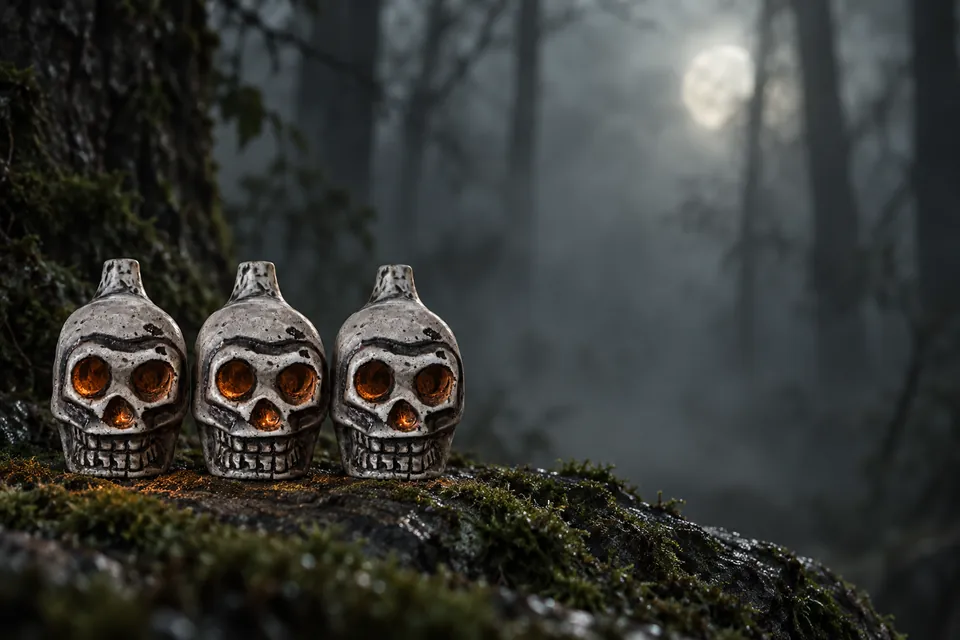
- 3-pack ($79.99). One popular but unproven idea is that massed whistles were blown together before battle; the Zurich team suggests a ritual role, possibly preparing sacrifices for their descent into Mictlan, the underworld. None of the theories is certain. Three whistles let a small group create that layered effect, and the per-whistle price drops to about $26.66.
For how the options compare beyond our shop, see our best Aztec death whistle guide.
A practical heads-up that is not a defect: most people can’t produce the full scream on the first try. The technique is a slow, sustained exhale, not a sharp blast. Our how-to-use guide walks you through it.
Frequently asked questions
Where can I buy an Aztec death whistle?
On Amazon, Etsy and eBay, from specialist shops such as Vat19, from individual makers, or from a single-product shop like ours. You can also 3D print one from a free file. Whatever you choose, look for a sound demo of the exact product, a stated material, tracking and a returns policy.
How much does an Aztec death whistle cost?
On September 30, 2026 we saw most replicas between about $12 and $45, handmade clay pieces around $75 and more, and free 3D print files. Ours is $34.99 for one, $59.99 for two, $79.99 for three.
Can I buy an Aztec death whistle on Amazon?
Yes, there are many listings. Choose one with a real video demo, a clear delivery date, reviews that describe the sound, and an easy return path. Be skeptical of unsourced decibel claims.
Is an Aztec death whistle for sale ever authentic?
No. What is sold is a replica. The original skull whistles are archaeological finds kept in museums. See our replica vs authentic guide.
Is the “125 dB” loudness claim true?
We have not seen independent measurements behind those figures, so treat them as marketing. The death whistle is loud enough to be unpleasant in a closed room: use it outside first and never next to anyone’s ear. Learn more in our breakdown of the death whistle’s sound.
How fast can I get one before Halloween?
It depends on the seller: check the delivery date at checkout. Ours ships tracked in 7 to 13 days to the US, 4 to 16 days to Canada, the UK, Ireland, Australia and New Zealand, so order by October 17 for Halloween (October 14 outside the US).
Should I buy a single whistle or a bundle?
A single if it is your first or a gift. A pair or 3-pack if you want overlapping screams for a group or a Halloween setup; bundles also lower the per-whistle price.
Buy yours
New to the whistle? Start on our home page. Ready to buy?
Aztec death whistle replica: $34.99, tracked US shipping in 7 to 13 days, 30-day returns