What is an Aztec death whistle? It is a small clay whistle shaped like a human skull, made in central Mexico before the Spanish conquest. Blown hard, it gives a shrill, rushing noise that many listeners hear as a human scream; blown softly, it sounds more like wind. The best-documented examples were found at Tlatelolco, in today’s Mexico City, with a sacrificed man buried at the temple of the wind god Ehecatl. The 2024 University of Zurich study dates that excavation to 1987 to 1989 (many popular accounts say 1999) and dates Aztec skull whistles to about 1250 to 1521 CE.
This guide covers the meaning of the name, the origin of the instrument, the history of its rediscovery, and what researchers think it was used for. Where the evidence runs out, we say so.
Aztec death whistle meaning
The name “death whistle” is a modern nickname. We know of no Aztec-era source that uses it; it spread through researchers, museums and the media because of two features:
- The skull. The whistle is modeled as a skull. The Zurich team led by Sascha Frühholz suggests the skull may represent Mictlantecuhtli, the Aztec Lord of the Underworld (ScienceDaily, 2024).
- The context. The Tlatelolco pair was found with a sacrificed man at a temple. Mexicolore, publishing the work of instrument researcher Roberto Velázquez Cabrera, associates the whistles with Ehecatl (wind) and Mictlantecuhtli (death) and suggests they could be related to the ritual of sacrifice.
In Aztec belief, most people who died went to Mictlan, the underworld ruled by Mictlantecuhtli and his wife Mictecacihuatl. According to Wikipedia’s summary of the myths, Mictlan had nine levels, the descent took four years, and the dead faced obstacles such as a wind of blades. That link between wind, death and the underworld is why so many interpretations of the whistle point there.
So the “meaning” of the death whistle is partly archaeological (a skull, a burial, a temple) and partly modern interpretation. Keep that split in mind when you read strong claims online.
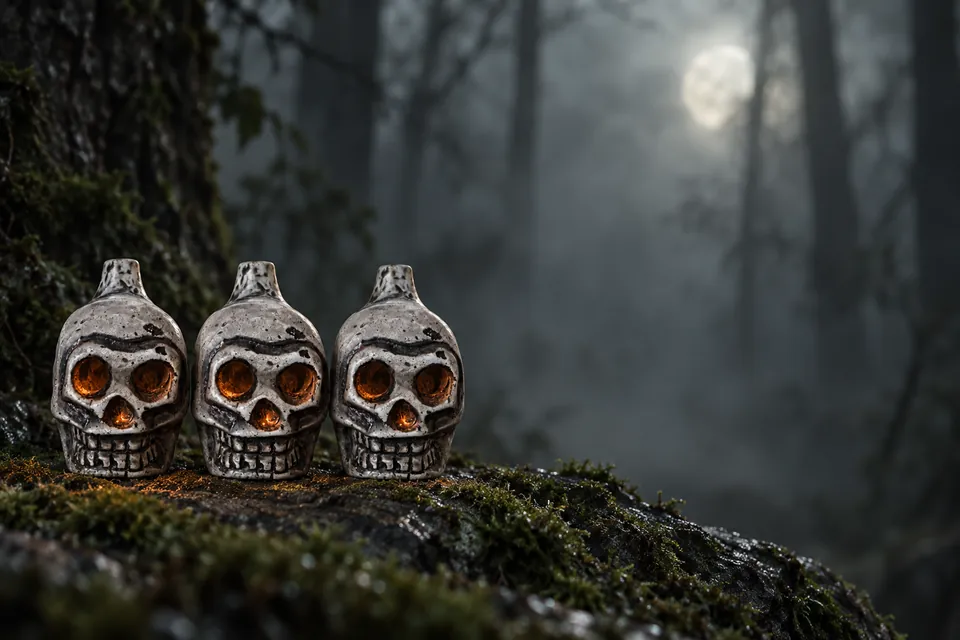
Origin: where the death whistle comes from
Culture. The death whistle is associated with the Aztecs, more precisely the Mexica of Tenochtitlan and its twin city Tlatelolco. Mexicolore notes it was used in several zones of ancient Mexico and belongs to a rare family of Mexican resonators that can imitate animal calls and the noise of wind or storms.
Date. Phys.org’s report on the 2024 study gives a date range of about 1250 to 1521 CE for the skull whistles, the Late Postclassic period that ends with the Spanish conquest of Tenochtitlan in 1521. Mexicolore dates one ceramic fragment to the Early Postclassic (1250 to 1380) and suggests the Tlatelolco burial may relate to the famine of 1454. Treat that last point as a hypothesis.
Design. Frühholz’s team describes “a unique internal construction of two opposing sound chambers that create physical air turbulence” as the source of the screeching sound. Air enters, the streams collide, and the result is noisy and rough rather than a clean tone.
Wider family. Music archaeologist Arnd Adje Both, as quoted by All That’s Interesting, calls the death whistle a type of “air spring” whistle and says this family was first made by the Maya around 700 to 800 CE. The skull death whistle itself is Aztec; our Mayan death whistle guide explains the difference.
History: from Tlatelolco to the lab
Before the famous find
Skull whistles did not appear out of nowhere at Tlatelolco. History.com reports that about half a dozen such clay instruments have been found at Aztec sites, the first in the late 19th century. All That’s Interesting notes that historian José Luis Franco documented similar whistles in the 1970s. What those earlier pieces lacked was a clear archaeological context.
The Tlatelolco burial
That context came from Tlatelolco, excavated by the Proyecto Tlatelolco of Mexico’s INAH under archaeologist Salvador Guilliem Arroyo. The 2024 Zurich paper, in a figure caption credited to Guilliem Arroyo, dates the burial’s discovery at the Ehecatl-Quetzalcoatl temple to 1987 to 1989. History.com also says the late 1980s; Wikipedia says the late 1990s, and many popular accounts give 1999, the year Mexicolore says the find was published. Mexicolore describes two death whistles recovered from the hands of the skeleton of a sacrificed man about 20 years old, and calls them the only known ancient death whistles with archaeological context.
A popular story says the whistles sat for years as “ornaments” until someone blew into one. We could not find a reliable source for that anecdote, so we leave it out.
Reconstruction
Much of what we know about how the whistles work comes from reconstruction. Roberto Velázquez Cabrera, a mechanical engineer who founded a virtual research institute on ancient Mexican wind instruments, built working models and described their two-chamber structure and wind-like sounds (Mexicolore). His models, and the replicas that followed, are why you can hear the sound today without touching an original.
The 2024 Zurich study
In 2024 Sascha Frühholz and colleagues at the University of Zurich published “Psychoacoustic and Archeoacoustic nature of ancient Aztec skull whistles” in Communications Psychology. They recorded two original whistles from Tlatelolco held by INAH in Mexico, studied five originals at the Ethnological Museum in Berlin, made 3D reconstructions and replicas, and played the sounds to volunteers. Listeners rated them as scary and aversive, heard them as a mix of voice-like and artificial, and brain scans showed strong responses in affective areas (ScienceDaily; Phys.org). The team noted it knew of no comparable instrument from other pre-Columbian cultures.
One honest nuance: music archaeologist Arnd Adje Both, who has tested originals, reports that they sound much softer than the shrieking replicas people know from videos, closer to wind noise (Wikipedia). The Zurich team also found that skull whistles can give soft, hiss-like sounds as well as scream-like ones. The famous scream is real, but it is one end of the range, and modern replicas are often built and played to maximize it.
What was it used for? Four hypotheses
Nobody left a written manual. Every use below is a hypothesis, and the evidence behind each is uneven.
- Sacrifice and funeral rites. The strongest case, because of the burial context. ScienceDaily reports the Zurich team’s view that the sound “may have prepared human sacrifices for their mythological descent into Mictlan.” Mexicolore also links the whistles to sacrifice.
- Imitating the wind. Arnd Adje Both, quoted by History.com, suggests the sound could be “the howling wind of the underworld.” The Ehecatl temple setting fits this reading, and Wikipedia cites his description of the original’s sound as close to atmospheric wind noise.
- Ceremonies for an audience. Frühholz told History.com the whistles would work best in a closed space, such as a ceremony, perhaps to frighten a victim or onlookers.
- Warfare. The image of hundreds of warriors screaming through skull whistles is the most repeated online. Wikipedia notes there is limited evidence for it. It remains possible, not shown.
Our view: the ritual reading is best supported; the battlefield story is a good story. Our page on whether Aztec death whistles are real sorts the evidence from the myths in more detail.
Why it matters today
The death whistle is one of the few Aztec sounds we can hear again, thanks to careful reconstruction. It also shows how much acoustic skill went into a small clay object. The originals stay in museums and, under Mexico’s 1972 federal law on archaeological monuments, belong to the nation; what you can buy is a replica. Our replica vs authentic guide explains what “authentic” means in a listing, and are Aztec death whistles illegal? covers the legal side.
To hear the sound, read our Aztec death whistle sound guide. To own one, our Aztec death whistle replica follows the skull design, costs $34.99, ships tracked in 7 to 13 days to the US, 4 to 16 days to Canada, the UK, Ireland, Australia and New Zealand and comes with 30-day returns. Makers can also look at 3D printed Aztec death whistles.
FAQ
What is an Aztec death whistle?
A skull-shaped clay whistle from pre-conquest central Mexico, dated about 1250 to 1521 CE. Two opposing internal chambers make the air collide, which produces a rough, scream-like or wind-like noise.
What does the Aztec death whistle mean?
“Death whistle” is a modern nickname. It comes from the skull shape, which may represent the death god Mictlantecuhtli, and from the Tlatelolco find: two whistles held by a sacrificed man at a temple of the wind god Ehecatl.
Where did the Aztec death whistle originate?
In central Mexico, among the Aztecs (Mexica). The best-documented examples come from Tlatelolco, in today’s Mexico City. The broader “air spring” whistle family may go back to the Maya, according to Arnd Adje Both.
When was the Aztec death whistle discovered?
Similar whistles were found from the late 19th century on. The key find with archaeological context came from a burial at the Ehecatl-Quetzalcoatl temple in Tlatelolco: the 2024 Zurich study dates the excavation to 1987 to 1989, while many popular accounts say 1999.
Were death whistles used in battle?
That is a popular theory, not an established fact. The best evidence points to ritual and sacrificial use.
Where are the original whistles now?
In museum and institutional collections. The Tlatelolco whistles are held by INAH in Mexico, and five other originals studied in 2024 are at the Ethnological Museum in Berlin.
Sources
- Mexicolore, “The ‘death whistle’”, by Roberto Velázquez Cabrera.
- Wikipedia, “Aztec death whistle” and “Mictlan.”
- History.com, “The Mystery of the Aztec Death Whistle” (Arnd Adje Both, Sascha Frühholz).
- Frühholz et al., “Psychoacoustic and Archeoacoustic nature of ancient Aztec skull whistles,” Communications Psychology, 2024; summaries on ScienceDaily and Phys.org (November 2024).
- All That’s Interesting, “The Aztec Death Whistle” (Arnd Adje Both, José Luis Franco).
- Mexico, Federal Law on Archaeological, Artistic and Historic Monuments and Zones (1972), English text via UNESCO.