Short answer: nobody can honestly name the single loudest Aztec death whistle, because no independent test has measured the models on sale under the same conditions. What we can tell you is what makes one whistle louder than another: its size, the precision of its internal chambers, and above all how hard it is blown. Those three things matter far more than any number printed on a listing.
This guide explains where the popular decibel figures come from, what the published research actually says, and how to compare two whistles yourself without damaging your hearing.
Is there a “loudest” Aztec death whistle?
Search any marketplace and you will see listings advertising “125 decibels”, “125+ decibels” or even “135 decibels”. We looked for the method behind those numbers: the distance of the meter, the weighting, the number of blows, who did the test. None of the listings we checked publishes it. A figure without a distance and a method cannot be compared with another figure, so it cannot crown a winner.
We also looked for independent measurements in news coverage and research. The most serious study to date, published by Sascha Frühholz and colleagues at the University of Zurich in 2024 (Communications Psychology, doi 10.1038/s44271-024-00157-7), set every sound it played to listeners at the same level (70 dBA) so that loudness would not skew the results. That was the right choice for a listening experiment, but it means the paper gives no loudness figure for the whistles as played.
So the honest position, and the one we take for our own replica, is this: there is no standard, published loudness measurement for Aztec death whistles, and any “loudest” claim should be read as marketing until someone shows the test.
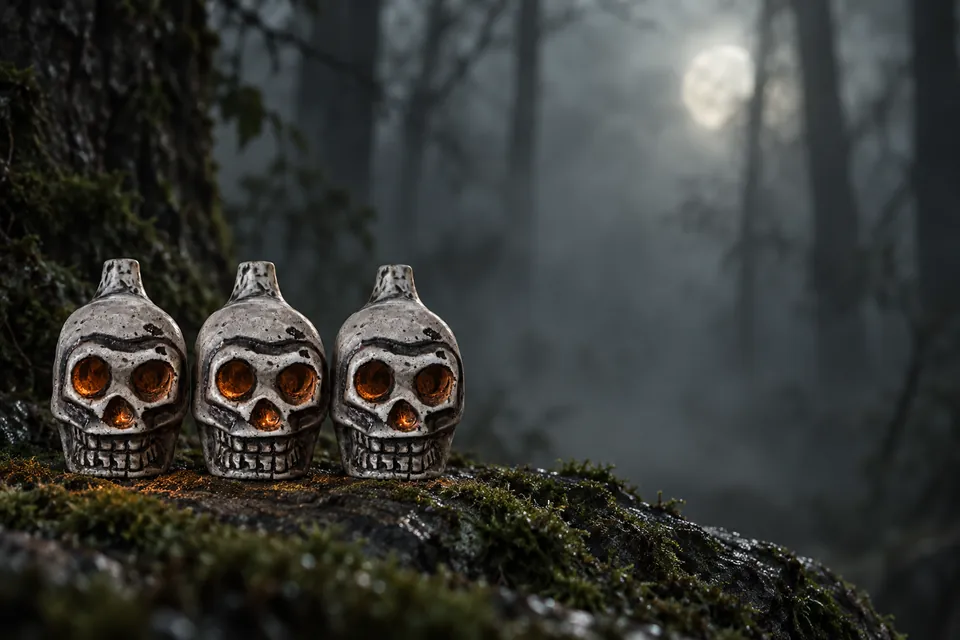
What actually makes one death whistle louder than another
Even without a league table, the physics and the research point to the factors that matter.
1. How hard you blow
This is the biggest variable, and it is documented. The Zurich study describes skull whistles as producing a wind-like or hiss-like sound that becomes shrill, piercing and scream-like “when played with intensive air pressure”. The same whistle can go from a breathy hiss to a full scream depending only on the player. Any two whistles compared with different breath are not being compared at all. Our guide on how to use an Aztec death whistle covers the technique.
2. Size
Size seems to matter a lot. The Wikipedia entry on the death whistle, summarizing music archaeologist Arnd Adje Both (Both, “Aztec Music Culture”, The World of Music, 2007), notes that Both tested original excavated whistles and found their sound “far softer” than the famous shriek, closer to wind noise, and that the piercing sounds people associate with the instrument usually come from much larger reproductions. In plain terms: a bigger modern reproduction can move more air and tends to be louder than the small originals.
3. The internal chambers
A death whistle is not a simple tube. The 2024 study describes an air duct with a narrowed passage, a counterpressure chamber, a collision chamber and a bell cavity, working together through turbulence. Small differences in how precisely those parts are formed change how easily the whistle “catches” into its scream and how much sound comes out. That is why two whistles that look alike can sound very different. We explain the mechanism in how an Aztec death whistle works.
4. Where you listen from
Sound level drops quickly with distance (the inverse-square law of basic acoustics). A reading taken a few centimeters from the whistle and one taken where a listener stands can differ enormously. This is the main reason quoted numbers disagree.
How to compare two whistles yourself
If you want to know which of two whistles is louder, a fair comparison is simple:
- Same distance. Put the meter (or a phone sound meter app) at a fixed distance, for example 1 meter, never at the mouthpiece.
- Same player, same breath. Use steady, strong blows of the same length, and repeat each whistle several times.
- Same place. Outdoors or in the same room; hard walls inflate readings.
- Compare, don’t certify. A phone app is fine for “A is louder than B”. It is not a calibrated measurement to publish.
- Protect your ears while testing (see below).
Loud enough to respect: hearing safety
Whatever the exact figure, a death whistle blown hard at close range is loud enough to deserve care. The CDC notes that a single loud sound near the ear can cause hearing loss, and that the louder the sound, the less time it takes. For workplace noise, NIOSH recommends a limit of 85 dBA averaged over 8 hours, halving the allowed time for every 3 dBA above that.
In practice:
- Never blow it toward anyone’s ear, and keep it away from babies and pets.
- Keep bursts short and don’t repeat them right next to your own head.
- Wear earplugs if you are testing or comparing whistles for a while.
- Warn people before a demonstration indoors: the startle is real.
- In public, a scream-like sound can be mistaken for a real emergency. Our article on whether Aztec death whistles are illegal covers noise rules and common sense.
What about our replica?
We sell a replica Aztec death whistle, and we have not published a lab measurement of it, so we do not claim it is the loudest. What we can say is how to get the most out of it: a strong, steady exhale, a good seal with your lips, and practice. If you want to hear the kind of sound these whistles make before buying, start with our page on the Aztec death whistle sound.
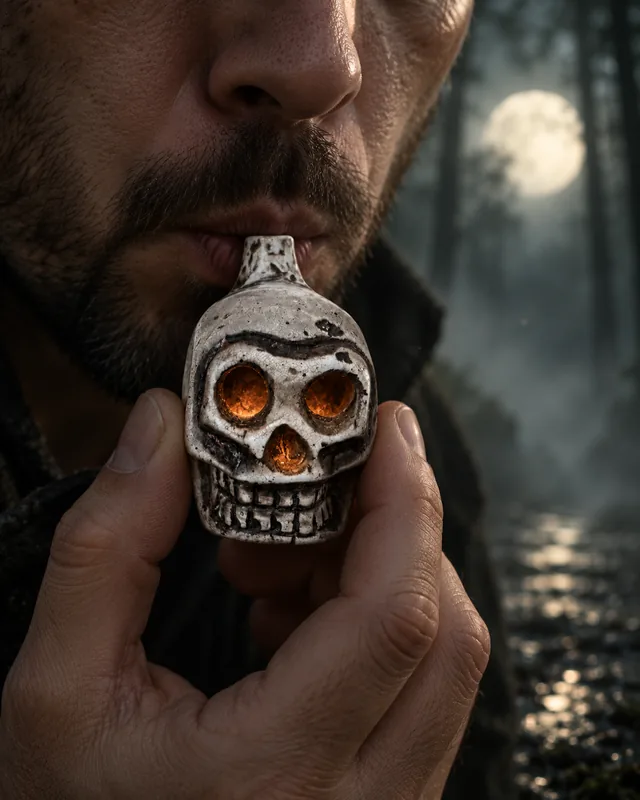
Frequently asked questions
What is the loudest Aztec death whistle?
No independent test has ranked the whistles on sale, so any “loudest” claim is unverified. In general, larger reproductions with well-formed internal chambers, blown hard, will be louder than small ones blown gently.
Is an Aztec death whistle really 125 decibels?
The 125 dB figure appears on many listings, but none we found states the distance, weighting or method, so it cannot be checked. We know of no published independent measurement confirming it.
Were the original Aztec whistles loud?
According to Arnd Adje Both’s tests of excavated originals, as summarized on Wikipedia, the originals sounded far softer than the famous shriek, more like wind noise. The shrill scream comes with strong air pressure, and many of the loudest modern sounds come from larger reproductions.
Can a death whistle damage your hearing?
Blown hard right next to the ear, it can be loud enough to cause harm, as with any loud sound near the ear. Keep it away from ears, keep bursts short and use earplugs for long sessions.
Where can I learn more?
See how loud an Aztec death whistle is for what decibel figures mean, the sound guide, or go back to the home page.