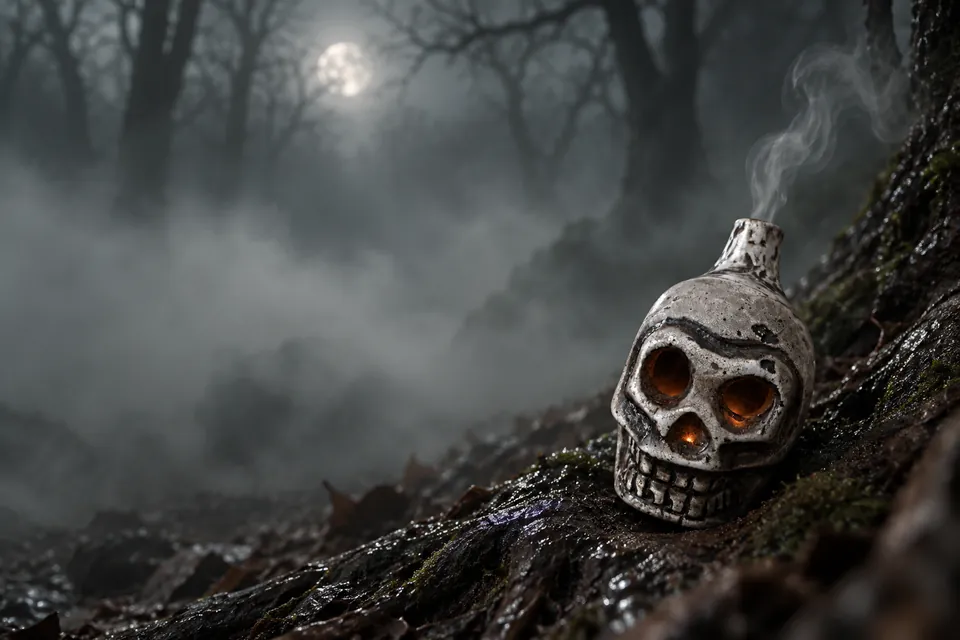
Is there a Mayan death whistle? Not in the sense most people mean. The skull-shaped “death whistle” that produces a scream-like noise is known from Aztec (Mexica) central Mexico: the best-documented example comes from a burial at Tlatelolco, in today’s Mexico City, excavated in 1987 to 1989 according to a 2024 study (many popular accounts say 1999). The Maya did make a great many clay whistles and ocarinas, some of them remarkable, and one music archaeologist links the wider family of “air spring” whistles to the Maya. But no source we could find describes a Maya skull whistle with the same design and sound. When a listing says “Mayan death whistle,” it almost always means the Aztec type.
Below: what the Maya actually played, where the Aztec whistle comes from, how the two compare, and why the names get mixed up.
Quick answer: Mayan whistle vs Aztec death whistle
| Maya clay whistles | Aztec death whistle | |
|---|---|---|
| Where | Maya lowlands: Yucatán, Campeche, Guatemala, Belize | Central Mexico, e.g. Tlatelolco (Mexico City) |
| When | Classic period figurine whistles, about 600 to 900 CE (Denver Art Museum) | Skull whistles dated about 1250 to 1521 CE (Frühholz et al., 2024) |
| Typical form | Figurines of people, animals and deities; ocarinas with finger holes | A small clay skull with two opposing internal chambers |
| Sound | Hollow notes, simple tones, melodies on ocarinas | Rushing, shrieking, scream-like noise |
| Best-known find | Burial whistles from Jaina Island, Campeche | Two whistles in the hands of a sacrificed man at the Ehecatl temple, Tlatelolco |
| Death link | Instruments buried with the dead (Maya music, Wikipedia) | Skull form, burial context, likely link to Mictlantecuhtli |
What the Maya actually played
The Maya had a rich sound culture, and clay whistles are one of its most common survivals.
- Figurine whistles. Hollow clay figurines from the Classic period often hide a whistle inside. The Denver Art Museum holds a Maya Whistle Figurine of a Seated Woman dated 600 to 900 CE: the whistle chamber sits in her right shoulder, and blowing into it gives a low whistling note. Many similar pieces are called “Jaina-style” after Jaina Island, off Campeche, where burials produced large numbers of them.
- Burial whistles from Jaina. Wikipedia’s article on Maya music notes clay whistles found in Jaina burial sites, with mouthpieces in several shapes, some modeled as human faces and some as animals linked to Maya deities.
- Ocarinas. The same source describes Maya ocarinas, small vessel flutes with four or five finger holes, and notes that some excavation reports suggest they were played in small cult rituals and burial ceremonies.
- Flutes and drums. The Dresden Codex, a Maya book of the 13th or 14th century, shows people playing drums and flutes.
So if you searched “mayan whistle,” the honest picture is a wide family of clay instruments, many of them musical, many of them found with the dead. None of the museum descriptions we checked calls any of them a death whistle, and none describes the Aztec skull’s scream.
Where the “Maya” link is real: the air spring family
There is one genuine thread connecting the two cultures. The death whistle belongs to an unusual family of ancient Mexican wind instruments. Mexicolore, publishing the work of Roberto Velázquez Cabrera, an engineer who spent years reconstructing these instruments, describes resonators that imitate animal calls and the noise of wind and storms.
Music archaeologist Arnd Adje Both, as quoted by All That’s Interesting, describes the death whistle as a type of “air spring” whistle and says this type was first made by the Maya around 700 to 800 CE. That is the strongest source for a Maya connection: the Maya may have pioneered the acoustic idea. It is not evidence of a Maya skull whistle, and we treat it as one expert’s view reported secondhand.
Where the Aztec death whistle comes from
The skull whistle with a solid archaeological context comes from Tlatelolco, the twin city of the Aztec capital Tenochtitlan. Archaeologist Salvador Guilliem Arroyo’s team excavated a sacrificed man of about 20 at the temple of Ehecatl, the wind god; Mexicolore describes two whistles recovered from his hands. The 2024 study below dates the excavation to 1987 to 1989, though many popular accounts say 1999.
In 2024 a University of Zurich team led by Sascha Frühholz studied original skull whistles from Tlatelolco and from the Ethnological Museum in Berlin, dated about 1250 to 1521 CE, and published the results in Communications Psychology. Their summary is direct on the Maya question. As reported by ScienceDaily, the team said they “don’t know of any comparable musical instrument from other pre-Columbian cultures.”
For the full story of the Tlatelolco find and what the whistle may have meant, read our Aztec death whistle history.
Why people say “Mayan death whistle”
Three reasons keep the mix-up alive:
- Maya and Aztec get blurred together. Both are Mesoamerican, both have famous death imagery, and many shoppers use the names as synonyms.
- Sellers hedge. Marketplace listings often title the same skull whistle “Aztec / Mayan death whistle” to catch both searches.
- The air spring link. Articles that repeat the Maya origin of the air spring whistle can read as if the Maya made death whistles too.
The two cultures are also far apart in time. Classic Maya figurine whistles date to about 600 to 900 CE; the Aztec skull whistles studied in Zurich date to about 1250 to 1521 CE, centuries later and hundreds of miles away.
Which one should you buy?
If you want the scream you heard in videos, you want the Aztec skull design. A “Mayan death whistle” sold online is the same product under another name, so judge it the way you would any replica: the shape of the internal chambers, a real demo of that exact item, and a clear return policy. Our replica vs authentic buying guide covers what to check, and are Aztec death whistles real? covers the evidence behind the originals.
Our own Aztec death whistle replica follows the Aztec skull design. It costs $34.99, ships tracked in 7 to 13 days to the US, 4 to 16 days to Canada, the UK, Ireland, Australia and New Zealand, and comes with 30-day returns. If you would rather print your own, see 3D printed Aztec death whistles, and for the legal side of owning or travelling with one, read are Aztec death whistles illegal?
FAQ
Is there a Mayan death whistle?
Not as a documented artifact type. The skull-shaped death whistle is known from Aztec central Mexico, notably the burial excavated at Tlatelolco in 1987 to 1989. The Maya made many clay whistles and ocarinas, but the sources we checked describe none with the Aztec skull design and scream.
Did the Maya invent the death whistle?
Possibly the idea behind it. Music archaeologist Arnd Adje Both is quoted as saying “air spring” whistles, the family the death whistle belongs to, were first made by the Maya around 700 to 800 CE. The skull-shaped death whistle itself is Aztec.
What does a Mayan whistle sound like?
Most Maya clay whistles give simple, hollow notes. The Denver Art Museum describes one Classic Maya figurine whistle as producing a low whistling noise. Maya ocarinas with finger holes could play several pitches.
Are “Mayan” and “Aztec” death whistles sold online different?
Usually not. Listings use both names for the same skull whistle. Check the design and ask for a demo of the actual item rather than trusting the label.
Where can I see real Maya whistles?
Museums with Mesoamerican collections, such as the Denver Art Museum, display Classic Maya figurine whistles. Aztec skull whistles are held by INAH in Mexico and by the Ethnological Museum in Berlin.

Sources
- Denver Art Museum, Whistle Figurine of a Seated Woman, Maya, 600 to 900 CE (object 1969.333).
- Wikipedia, “Maya music” (Jaina whistles, ocarinas, Dresden Codex).
- Mexicolore, “The ‘death whistle’”, by Roberto Velázquez Cabrera.
- All That’s Interesting, “The Aztec Death Whistle” (quoting Arnd Adje Both on air spring whistles).
- Frühholz et al., “Psychoacoustic and Archeoacoustic nature of ancient Aztec skull whistles,” Communications Psychology, 2024; ScienceDaily and Phys.org summaries (November 2024).
- Wikipedia, “Aztec death whistle.”
See our Aztec death whistle replica or go back to the home page.