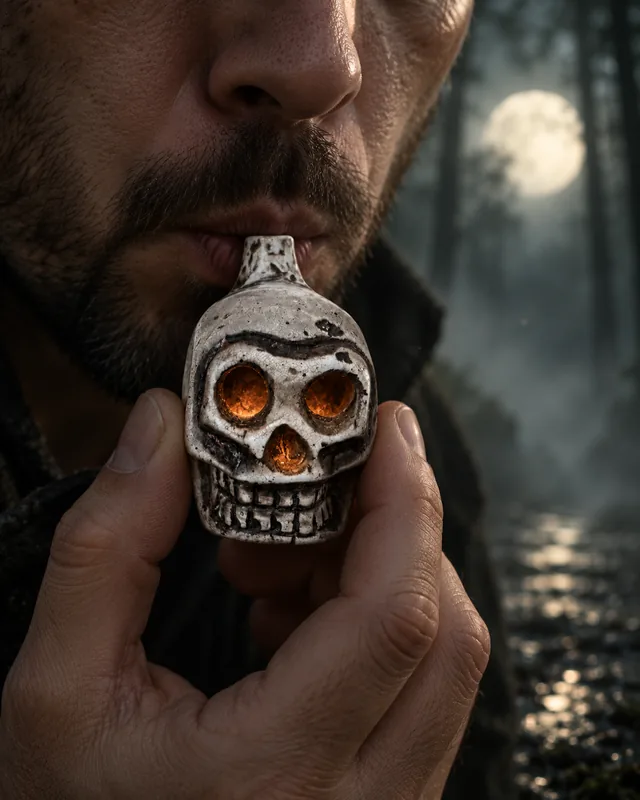
Are Aztec death whistles real? Yes. Real Aztec death whistles are small skull-shaped clay whistles, dated about 1250 to 1521 CE, and originals survive in collections in Mexico and Germany. The key example was excavated with a sacrificed man at the Ehecatl-Quetzalcoatl temple in Tlatelolco, Mexico City: a 2024 peer-reviewed study dates that excavation to 1987 to 1989, while many popular accounts say 1999. What is often not real is the story told around them: the curse, the proven battlefield use, and some of the claims about how they sound.
This page sorts the evidence from the myths. If you are here to buy one, jump to our authentic Aztec death whistle buying guide.
The evidence: three things you can check
1. An excavated original, in context
Mexico’s national archaeology institute, INAH, ran the Proyecto Tlatelolco under archaeologist Salvador Guilliem Arroyo. The 2024 study by Sascha Frühholz and colleagues reproduces a photo of a sacrificed man with an original skull whistle, found at the Ehecatl-Quetzalcoatl temple and dated in its caption to 1987 to 1989. Mexicolore, publishing the work of instrument researcher Roberto Velázquez Cabrera, describes two whistles recovered from the hands of this man, about 20 years old, and calls them the only known ancient death whistles with archaeological context.
2. Originals in collections
Earlier finds exist too. History.com reports that about half a dozen such clay instruments have turned up at Aztec sites since the late 19th century. The Zurich study recorded two originals from Tlatelolco held by INAH and examined five more at the Ethnological Museum in Berlin.
3. A peer-reviewed study of the sound
In 2024 the University of Zurich team published “Psychoacoustic and Archeoacoustic nature of ancient Aztec skull whistles” in Communications Psychology. They describe two opposing internal chambers that create air turbulence, the source of the screech. Volunteers rated the sounds as scary and aversive, heard them as part voice, part artificial, and brain scans showed strong responses in emotional processing areas (ScienceDaily; Phys.org).
So the object is real, the context is real, and the effect on listeners has been measured. For the full timeline, read our Aztec death whistle history.
Myths vs facts
| Claim | Verdict | What the sources say |
|---|---|---|
| ”They’re a viral hoax.” | False | Originals were excavated and are held by INAH and the Ethnological Museum in Berlin. |
| ”They’re 1,000 years old.” | Misleading | Dated about 1250 to 1521 CE (Frühholz et al., 2024). |
| ”Found in 1999.” | Disputed | The 2024 study dates the excavation to 1987 to 1989; many popular accounts say 1999. |
| ”Aztec armies used them to terrify enemies.” | Unproven | A popular theory. Wikipedia notes limited evidence for battlefield use. |
| ”They were used in sacrifice rituals.” | Plausible | Fits the burial context; the Zurich team and Mexicolore both suggest it. |
| ”Every original screams.” | Oversimplified | Arnd Adje Both reports the originals he tested sound far softer, like wind. |
| ”They’re cursed.” | False | No evidence of any kind. The death imagery is cultural, not supernatural. |
| ”You can buy an original.” | False | Mexico’s 1972 law makes archaeological pieces property of the nation and bans export. |
Do the originals really scream?
This is the most honest nuance, and most sellers skip it. Music archaeologist Arnd Adje Both, who has tested originals, reports that their sound is much softer than the shrieking replicas in videos, closer to wind noise (Wikipedia). Quoted by History.com, he suggests the sound may represent “the howling wind of the underworld” rather than a scream.
The Zurich team reached a compatible conclusion from another angle: skull whistles can produce soft, hiss-like sounds and also aversive, scream-like ones, depending on how they are blown. The scream is real, but it sits at one end of the range. Many modern replicas are built and played to push that end, which is what you hear online.
Want to judge for yourself? Our Aztec death whistle sound guide lets you listen.
Are they cursed?
No. A death whistle is a clay wind instrument that makes a harsh sound through air turbulence. The dark reputation comes from real cultural links: the skull may represent Mictlantecuhtli, lord of the underworld (ScienceDaily), and the Tlatelolco whistles come from a sacrificial burial at a temple of the wind god Ehecatl. Those links deserve respect. A curse is modern internet folklore, and no source we found supports it.
The one real risk is your ears. Do not blow a death whistle right next to someone’s head.
What were they used for?
Nobody knows for sure. The main hypotheses, from strongest to weakest support:
- Sacrifice and funeral rites, suggested by the burial context and by the Zurich team.
- Wind imitation linked to Ehecatl and the underworld, argued by Arnd Adje Both.
- Ceremonies for an audience: Frühholz told History.com they would be most effective in a closed space.
- Warfare, the most repeated and least supported.
Our history guide goes through each one with its sources.
Can you own a real Aztec death whistle?
Not an original. Under Mexico’s 1972 Federal Law on Archaeological, Artistic and Historic Monuments and Zones, pre-Hispanic archaeological objects are inalienable property of the nation, and exporting them is banned without special authorization. A listing that claims to sell an ancient original is either wrong or selling something you should not buy. We cover the legal side in are Aztec death whistles illegal?
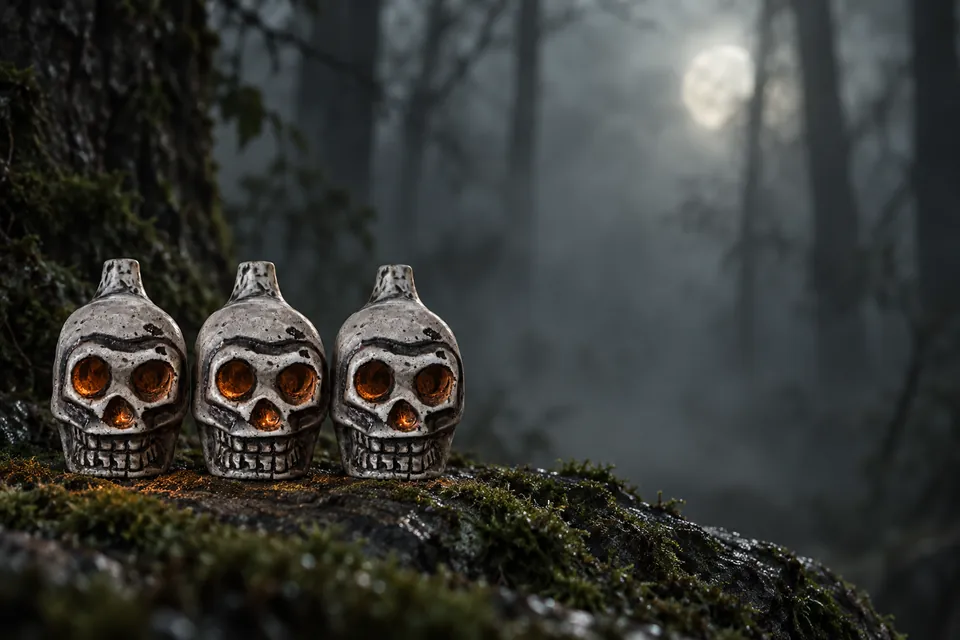
What you can own is a replica. “Real” and “authentic” in a shop listing should mean a faithful reproduction of the original skull design, not an artifact. Our replica vs authentic buying guide explains what to check. Our own Aztec death whistle replica is sold as exactly that: a replica, $34.99, tracked delivery to the US in 7 to 13 days, 30-day returns. Makers can also print one: see 3D printed Aztec death whistles. And if you arrived here from a “Mayan death whistle” listing, read Mayan death whistle vs Aztec.
FAQ
Are Aztec death whistles real?
Yes. They are skull-shaped clay whistles from Aztec central Mexico, dated about 1250 to 1521 CE. An original was excavated at the Ehecatl-Quetzalcoatl temple in Tlatelolco, and others are held at the Ethnological Museum in Berlin.
When was the real Aztec death whistle found?
The 2024 Frühholz study dates the Tlatelolco excavation to 1987 to 1989. Many popular accounts give 1999, and Wikipedia says the late 1990s. Similar whistles had been found since the late 19th century, but without clear context.
Is the death whistle sound fake?
No, but it varies. Replicas can produce a genuine scream-like noise through air turbulence. Arnd Adje Both reports that the originals he tested sounded softer and more like wind, so the loudest online clips show one end of the range.
Were Aztec death whistles used in war?
That is unproven. Ritual and sacrificial use is better supported by the evidence.
Can I buy a real, original Aztec death whistle?
No. Originals are protected under Mexican law and cannot legally be sold or exported. Anything for sale is a replica.
Sources
- Frühholz et al., “Psychoacoustic and Archeoacoustic nature of ancient Aztec skull whistles,” Communications Psychology, 2024 (PMC11555264); summaries on ScienceDaily and Phys.org (November 2024).
- Mexicolore, “The ‘death whistle’”, by Roberto Velázquez Cabrera.
- Wikipedia, “Aztec death whistle.”
- History.com, “The Mystery of the Aztec Death Whistle.”
- Mexico, Federal Law on Archaeological, Artistic and Historic Monuments and Zones (1972), English text via UNESCO.