The honest answer: there is no published, independent measurement of how loud an Aztec death whistle is. Loudness depends on the individual whistle (its size and internal chambers), on how hard it is blown and on where you measure from. The “125 dB” printed on many listings comes without a stated method, so it cannot be verified. What is documented is how the sound changes with breath, why it feels so alarming, and how to keep your hearing safe.
If your real question is which whistle to buy for maximum volume, see our separate guide to the loudest Aztec death whistle. Here we focus on the decibel question itself.
Aztec death whistle decibels: is there a real measurement?
We looked for one. Here is what we found.
- Seller listings. Marketplace listings commonly advertise “125 decibels”, “125+” or higher. None of those we checked says at what distance, with what weighting (A or C), peak or average, or with how many blows. Without that, the number is a slogan, not a measurement.
- The peer-reviewed research. The main scientific study, by Sascha Frühholz and colleagues at the University of Zurich (Communications Psychology, 2024, doi 10.1038/s44271-024-00157-7), recorded original skull whistles and replicas and played the sounds to listeners. For the experiments, every sound was set to the same level, 70 dBA, so the paper deliberately does not report how loud the whistles are when played.
- The originals. Music archaeologist Arnd Adje Both tested original excavated whistles. As summarized on Wikipedia (citing Both, “Aztec Music Culture”, The World of Music, 2007), he described their sound as far softer than the famous shriek, closer to wind noise, and the piercing sounds popularly credited to the death whistle usually come from much larger reproductions.
So if you searched for “Aztec death whistle decibels, real measurement”, the honest result is that no standard measurement exists yet. Anyone quoting a precise figure should be able to tell you how they got it.
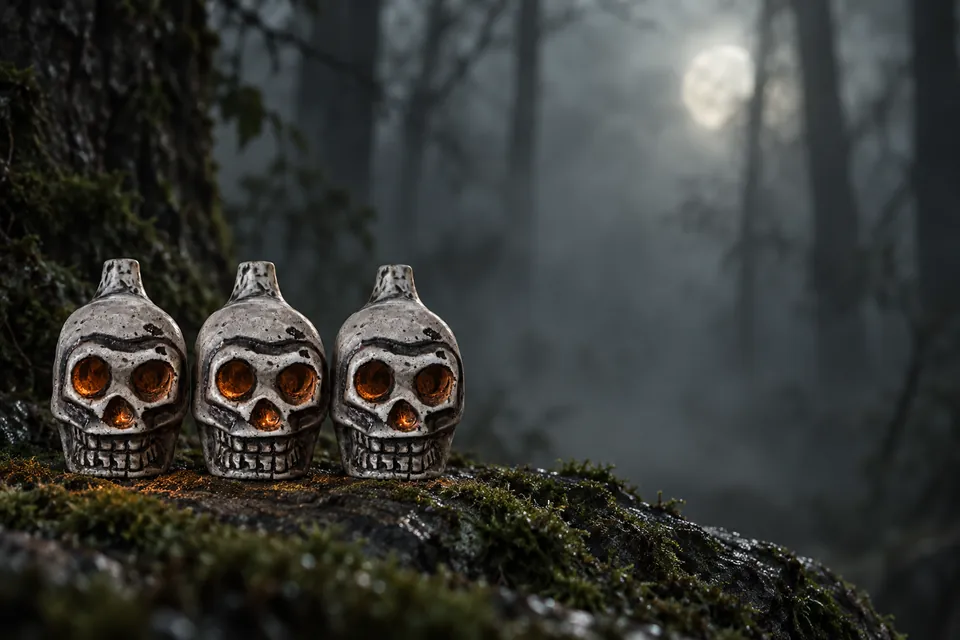
Why the numbers disagree
Even well-meaning measurements can differ wildly, for simple reasons.
Distance. Sound level falls off quickly as you move away from the source. A meter a few centimeters from the whistle and one where a listener stands will give very different readings.
Breath. The Zurich team describes a sound that is wind-like or hiss-like and becomes shrill, piercing and scream-like “when played with intensive air pressure”. The same whistle can be quiet or very loud depending on the player.
The whistle itself. Size, the precision of the internal chambers and the build all change the output. One sample is an anecdote, not a rule for every whistle.
Peak or sustained. A split-second peak on a hard blow is not the level you hear during normal play. A listing that quotes a peak without saying so makes the whistle sound louder than it usually is.
The room. Hard, reflective rooms raise readings; open air lowers them.
Why it feels louder than it is
Most people who hear a death whistle up close describe it as deafening. Part of that is the character of the sound rather than its level. In the Zurich study, listeners rated skull whistle sounds as highly aversive and scary, and classified them as a hybrid: partly voice-like and scream-like, partly mechanical. The sounds were perceived as close to rough, shrill technical sounds such as alarm clocks or emergency horns, and brain imaging showed they engaged regions involved in processing emotional significance.
In other words, the alarm you feel is real, but it is driven by how the sound is built (rough, noisy, scream-like), not proof of a record-breaking decibel level. We explain the mechanism in how an Aztec death whistle works and let you hear it on the Aztec death whistle sound page.
How to read any decibel claim
Before you trust a number, ask:
- At what distance? No distance, no comparison.
- Peak or average, A- or C-weighted? These change the figure.
- Which whistle, how many blows, who blew? A single best blow is not typical use.
- Indoors or outdoors?
- Who published it, and why? A sales page and an independent test are not the same thing.
This is also why we do not print a decibel figure for our own replica Aztec death whistle: we have not published a measurement of it, and we would rather tell you that than invent one.
Hearing safety: what the CDC and NIOSH say
Whatever its exact level, a death whistle blown hard at close range can be loud enough to hurt. The CDC lists a single loud sound near the ear among the causes of noise-induced hearing loss and notes that the louder the sound, the shorter the time it takes to cause damage. For occupational noise, NIOSH recommends an exposure limit of 85 dBA averaged over an 8-hour day, with the allowed time halved for every 3 dBA above that.
Practical rules:
- Never blow it toward someone’s ear, and keep it away from babies and pets.
- Keep bursts short, especially close to your own head.
- Wear earplugs if you practice or test for more than a few blows.
- Warn people before a demonstration indoors. The startle is involuntary.
- Think twice in public. A scream-like sound can be taken for a real emergency. See are Aztec death whistles illegal? for noise rules and common sense.
A note on the artifact
The death whistle is a real Mesoamerican object. Excavations at the temple of the wind god Ehecatl-Quetzalcoatl at Tlatelolco, in Mexico City, uncovered the remains of a sacrificed young man holding a skull-shaped whistle. (The 2024 study dates that excavation to 1987 to 1989.) What the whistles were used for is still debated. The 2024 study concludes that use in ritual contexts, especially sacrificial rites and ceremonies related to the dead, “seems very likely”, and judged the popular battlefield story rather unlikely. For the full story, see the history of the Aztec death whistle.
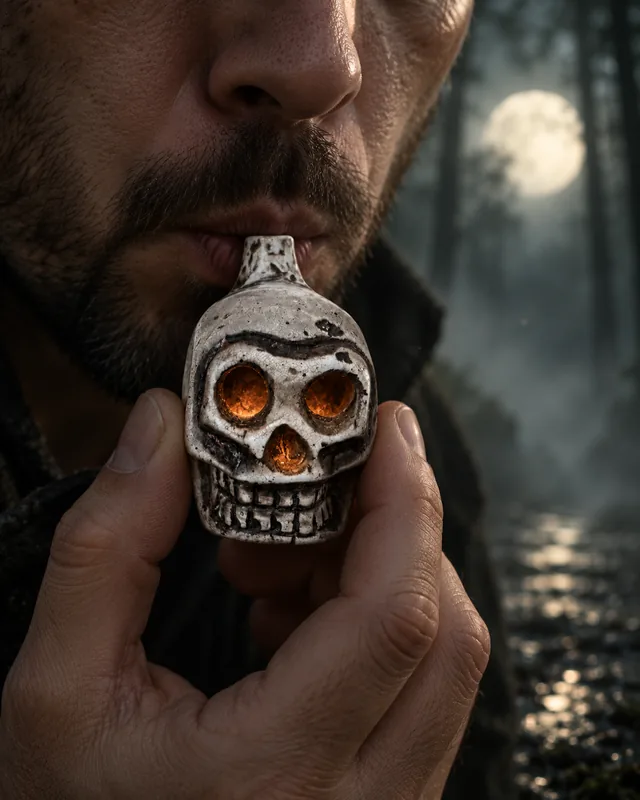
Frequently asked questions
How loud is an Aztec death whistle in decibels?
There is no published, independent measurement. The level depends on the whistle, the breath and the distance of the meter. Figures like “125 dB” on listings come without a method and cannot be verified.
Is the Aztec death whistle really 125 dB?
We could not find any independent test confirming it. The number appears in marketing without a distance or weighting, so treat it as a claim, not a fact.
Were the original Aztec whistles loud?
According to Arnd Adje Both’s tests of excavated originals, as summarized on Wikipedia, they sounded far softer than the famous shriek, more like wind noise. Larger modern reproductions blown hard produce the piercing scream most people know.
Why does it sound so much scarier than other loud sounds?
Research from the University of Zurich (2024) found that listeners perceive skull whistle sounds as aversive, scary and partly scream-like, a hybrid of voice and machine. The fear comes from the texture of the sound, not only its volume.
Can an Aztec death whistle damage your hearing?
Close to the ear and blown hard, yes, it can be loud enough to harm hearing, like any loud sound near the ear. Never aim it at ears, keep bursts short and use earplugs for long sessions.
Where can I hear one or buy one?
Listen on our sound page, see our replica, or start from the home page.