The package arrives. You take the skull whistle out, put it to your lips and blow.
A thin, disappointing wheeze comes out. Or a flat, plain whistle tone. Nothing like the scream you heard in the video.
Don’t panic, and don’t send it back yet. In most cases the whistle is fine and the problem is technique. The scream that made the Aztec death whistle famous is not produced the way you blow a referee’s whistle. It needs a slower breath and a little patience, which feels backwards if you have only ever used ordinary whistles. Most people get there within a few minutes of practice.
This guide covers how to use an Aztec death whistle from the first try: where your lips go, how to blow it, how to find the angle, and how to fix every common problem.
How to use an Aztec death whistle in 5 steps
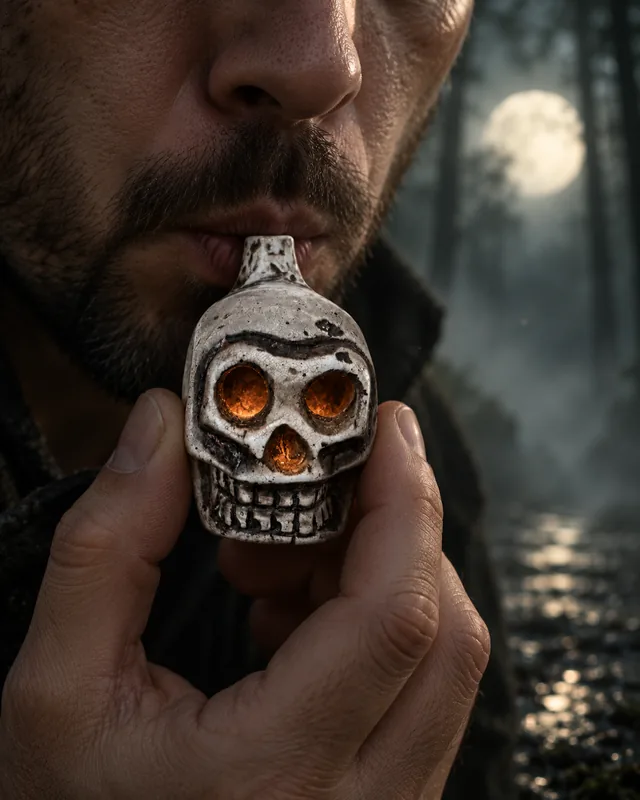
- Find the mouthpiece. On most replicas, including ours, you blow into the small opening at the neck, above the skull, not into the skull’s mouth.
- Leave the other openings free. Hold the skull loosely in one hand and keep your fingers away from every hole.
- Seal your lips gently around the mouthpiece. Relaxed lips, no puffed cheeks.
- Blow slowly and keep blowing. A steady, sustained exhale, like cooling a spoonful of soup. Not a sharp blast.
- Adjust until the tone “tears.” Change the air speed and tilt slightly. At the right speed, the plain whistle breaks into a shriek.
First time? Blow it outside, point it away from people and pets, and never next to anyone’s ear.
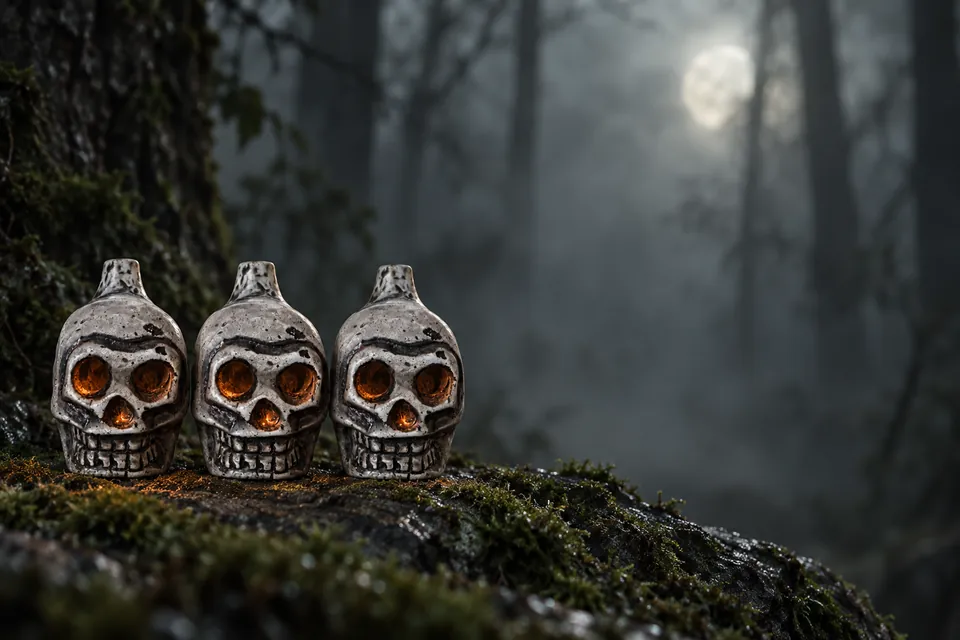
How to hold the death whistle
The first thing most people get wrong is the grip.
The correct hold:
Pick up the death whistle in one hand. The mouthpiece at the neck points toward your lips; the other opening, where the sound comes out, should face away from you, with nothing in front of it.
This is important: do not cover any opening with your fingers. The sound depends on air moving freely through the chamber. A very common beginner mistake is gripping the whistle too firmly and partly blocking a hole with a fingertip. That alone can turn the scream into a dull hiss.
Positioning your lips:
Place your lips loosely around the mouthpiece, not pressed hard. You want a gentle seal so the air goes into the whistle instead of leaking around it, without clamping down.
The angle:
Start with the skull roughly upright and then tilt it slightly forward or back while you blow. Every replica is shaped a little differently inside, so the best angle varies from one whistle to the next. Once you find your whistle’s sweet spot, the scream becomes easy to repeat.
Both hands or one?
One hand is fine and more natural. If you want more control during your first session, cup the body loosely in both hands, holding it steady without covering any opening.
How to blow an Aztec death whistle: breath technique
This is the most important section of the guide. Get this right and everything else follows.
The fundamental mistake: blowing too hard.
Every habit from ordinary whistles tells you to blow a short, forceful burst. Coaches and referees have all learned that. A death whistle does not work that way. A quick blast usually gives you a plain tone or a squeak, because the air does not stay in the chamber long enough to build the rough, screaming sound.
Why a slow breath works:
Scholars describe the death whistle as an “air spring” whistle: the air you blow in runs into a pocket of air trapped inside a chamber, and that collision distorts the sound (Mexicolore). A 2024 University of Zurich study, which made 3D reconstructions of original whistles held at the Ethnological Museum in Berlin, found two opposing sound chambers that create air turbulence, the source of the screech (University of Zurich, 2024). That turbulence needs a steady flow of air, not a puff.
The correct breath technique:
Think of blowing to cool a spoonful of hot soup. Slow. Steady. Moderate pressure. Your cheeks stay relaxed, not puffed. Your lips stay loose around the mouthpiece.
What you are listening for is the moment the sound “catches.” At the right air speed, the clean whistle tone breaks into a harsh, layered shriek. That happens on a sustained exhale, not an instant burst.
Duration:
Hold the exhale for a few seconds. Too short and the sound never develops. The scream usually builds a moment into the breath, so don’t judge the whistle on the first half second.
Pressure variation:
Once you can produce the basic scream, vary the pressure slightly mid-exhale. A little more air gives you more volume; easing off gives the wavering, dying quality that makes the sound so unsettling. That variation is what makes it sound like a voice rather than a machine.
See the Aztec death whistle replica
How to do the death whistle sound: angle and positioning
Even with the right breath, the angle of the whistle changes the sound.
Why angle matters:
The inside of a skull whistle is not a smooth, symmetrical tube. Depending on how the air enters, the chamber responds differently: a lower, rougher scream at one angle, a higher, sharper screech at another. That is normal, not a defect.
Finding your whistle’s sweet spot:
Start with the skull roughly upright and blow your slow, sustained breath. If you get a plain tone, tilt it a little further one way. Still plain? Tilt it the other way. Make small changes, one at a time.
The “scream zone” is a narrow range for each whistle. When you hit it, you will know immediately: the single note turns into a rough, multi-layered shriek. Hold that angle.
Side-to-side tilt:
After you find the vertical sweet spot, try small tilts left and right. They can change the character of the scream more than you would expect.
Remember your sweet spot:
After a few sessions with the same whistle, you will reach for the right angle without thinking. The learning curve is short: most people get a repeatable scream within one practice session.
Troubleshooting: why your death whistle won’t scream
| Problem | Most likely cause | Fix |
|---|---|---|
| Plain whistle tone, no scream | Blowing too hard or too fast | Slow down to a steady “soup-cooling” breath, then adjust the angle |
| No sound at all | A finger covering an opening, or lips not sealing the mouthpiece | Check both openings are clear; seal your lips gently around the neck |
| Weak, breathy sound | Stopping the breath too early, or slightly off angle | Hold the exhale a few seconds longer while tilting slowly |
| Scream comes once, then disappears | Angle and air speed not yet memorized | Normal: take a break, then try again; the second session is easier |
| Sounds different from videos | Replicas vary in shape and size, and videos are often edited or amplified | Nothing to fix; compare with your own best attempt, not the video |
“I only get a plain whistle sound”
Cause: You are almost certainly blowing too hard. The air moves through too fast for the rough, turbulent sound to form.
Fix: Reduce your breath pressure noticeably. Use the soup-cooling breath until you hear the sound change. If you are already blowing gently, try a small angle change in either direction.
“No sound at all”
Cause: Either the airflow is blocked, you are blowing into the wrong opening, or a finger is covering a hole.
Fix: Check your grip and look at every opening while you hold the whistle: none should be covered. Make sure your lips are on the mouthpiece at the neck. Check that no dust or packing debris is stuck in the openings.
“The sound is weak, not the scream I expected”
Cause: You are probably close to the right technique but slightly off on angle, or stopping the exhale too early.
Fix: Hold the breath longer before judging, and slowly tilt the whistle while you keep blowing. The moment you hit the sweet spot, the sound changes. A quiet space helps at first, so you can hear the difference between a plain tone and the scream beginning.
“I can’t reproduce the scream consistently”
Cause: You found the sweet spot once but have not memorized the angle and breath yet.
Fix: This is normal and temporary. Take a break and come back. The second session almost always goes better than the first, and by the third or fourth the scream comes on demand.
“My whistle sounds different from the video”
Cause: Replicas differ in size and internal shape from one maker to another, and even between units. Many online videos are also recorded close to the microphone or edited. Interestingly, a music archaeologist quoted on Wikipedia reports that the original whistles sound closer to wind noise, and that the loud shrieks come from much larger reproductions.
Fix: Nothing needs fixing. Your whistle has its own voice.
Getting the most volume from your whistle
Once the basic technique works, here is how to get more out of it:
Build pressure gradually: Once the scream has started, add air slowly while keeping the breath steady. You are not switching to hard blowing, just giving a steady stream more force.
Take a full breath first: A deep breath, not a quick sniff, gives you the sustained exhale the scream needs.
Room effects: The whistle sounds very different in different spaces. Indoors, walls and ceilings reflect the sound and make it feel harsher and closer. Outdoors, it spreads out and carries. Try it outside first, and keep it well away from ears, including your own.
Several breaths in a row: For a demonstration, try two or three sustained exhales in a row with short breaths in between. With a rhythm of breathe in, scream, breathe in, scream, the sound becomes almost continuous.
Hear it before you try
If you want to know what you are aiming for, listen first. Our Aztec death whistle sound guide explains what makes the sound so unsettling and what listeners in the Zurich study heard. When you watch any tutorial, focus on the length of the exhale: the sustained breath is the main difference from blowing an ordinary whistle.
FAQ: using a death whistle
How do you blow an Aztec death whistle?
Put your lips gently around the mouthpiece (on most replicas, the opening at the neck above the skull), keep every other opening uncovered, and blow a slow, steady, sustained breath. Adjust the angle slightly until the plain tone breaks into a scream.
Why does my Aztec death whistle only squeak?
Usually because you are blowing too hard and too fast. Slow down, keep the breath steady for a few seconds, and tilt the whistle a little until the sound catches.
How long does it take to learn?
Most people get the scream within a few minutes and can repeat it after one or two short sessions.
Is it safe to use indoors?
It is loud enough to be unpleasant in a closed room. Practice outside first, never blow it next to someone’s ear, and keep it away from pets.
Can a 3D printed death whistle be played the same way?
Yes, the technique is the same: mouthpiece, slow breath, small angle changes. Results depend on the print and the design; see our guide to the 3D printed Aztec death whistle.
Is it legal to own and use one?
We cover that question in detail in are Aztec death whistles illegal?.
Conclusion
Learning to use an Aztec death whistle takes one short session. The key, a slow and sustained breath instead of a sharp blast, feels backwards at first but makes sense once you know the sound comes from air colliding inside the chamber. Find the mouthpiece, leave the openings clear, find your whistle’s angle, and the scream will come.
For more on the sound itself, see our Aztec death whistle sound guide. For how loud these whistles really get, read our loudest Aztec death whistle article. New to the object? Start on our home page.
Get your Aztec death whistle replica: $34.99, tracked shipping in 7 to 13 days, 30-day returns