Short answer: no, an Aztec death whistle replica is not illegal to own or buy in the United States. We found no federal law that bans whistles as such, and a modern replica is simply a noisemaker. What can get you in trouble is how you use it: blasting it at night can break a local noise ordinance, blowing it at someone on purpose can count as disturbing the peace, and scaring animals in a national park is prohibited by federal rules. Genuine archaeological whistles are a completely different story, because Mexico claims them as national property and bans their export.
Below, each point is tied to the actual law or official source so you can check it yourself.
Not legal advice. This article is general information, current as of September 2026. Laws vary by state, city and venue. If you have a specific situation, ask a local attorney or the authority in charge.
Is the Aztec death whistle illegal to own in the US?
No. We could not find any federal statute, and no state law in the sources we reviewed, that makes it a crime to own a whistle, including a skull-shaped one. The death whistle has no blade, no projectile and no chemical, so it does not fall into the categories that weapons laws usually target.
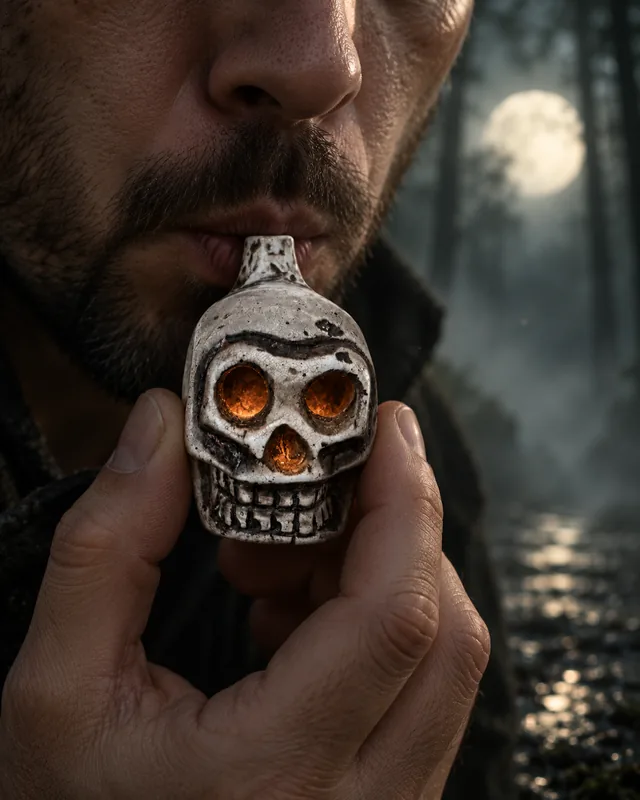
Everything sold online today, including our Aztec death whistle, is a modern replica of an ancient design. Owning a replica is legally the same as owning a referee whistle or a party horn. If you are still wondering whether the originals even exist, our guide Are Aztec death whistles real? covers the archaeology.
When using a death whistle can break the law
Noise ordinances
Most US cities regulate noise, and a death whistle is designed to be loud and shrill. Two real examples:
- New York City. The city’s Noise Code says plainly: “No person shall make, continue or cause or permit to be made or continued any unreasonable noise” (NYC Administrative Code § 24-218). The code defines unreasonable noise partly by how far a sound rises above the ambient level, with a stricter bar between 10 p.m. and 7 a.m.
- California. State law punishes “any person who maliciously and willfully disturbs another person by loud and unreasonable noise” with up to 90 days in county jail, a fine of up to $400, or both (California Penal Code § 415).
Neither law names whistles; both target unreasonable noise and intent to disturb. One blow in your backyard at 4 p.m. is very different from repeated screams under a neighbor’s window at midnight.
Disturbing the peace and pranks
This is where most real-world trouble comes from. Sneaking up on someone and blowing a death whistle next to their head is not just rude; depending on where you live, it could fit a disturbing-the-peace or harassment statute like the California one above. If you want scares, keep them consensual: a Halloween party where guests know what is coming, not strangers on the street.
Wildlife in national parks
In national parks, spooking animals is specifically prohibited. Federal rules for National Park Service areas ban “the feeding, touching, teasing, frightening or intentional disturbing of wildlife nesting, breeding or other activities” (36 CFR § 2.2(a)(2)). A death whistle aimed at elk, birds or bears falls squarely into “frightening.” State parks and wildlife agencies often have similar rules, so check before you hike with one.
Schools, events and airlines
Schools and venues set their own conduct rules. We did not find a documented, school-wide US ban on death whistles specifically, but most schools, stadiums and concert venues prohibit disruptive noisemakers under general policies. Assume it will be confiscated if you blow it during class or a show, and read the venue’s prohibited items list before you go.
Flying. The TSA’s official What Can I Bring? list has no specific entry for whistles as of September 2026, and TSA states that “the final decision rests with the TSA officer on whether an item is allowed through the checkpoint.” A skull-shaped object can draw a second look at the X-ray, so packing it in checked luggage is the low-stress option. Needless to say, never blow it on a plane.
Genuine archaeological whistles: this is where it gets illegal
Here the answer changes completely. Original skull whistles, like the ones found with a sacrificed man during excavations between 1987 and 1989 at the Ehecatl-Quetzalcoatl temple in Tlatelolco (Frühholz et al., 2024), are protected cultural heritage. You can read that story in our Aztec death whistle history guide.
Mexico’s 1972 federal law
Mexico’s Federal Law on Archaeological, Artistic and Historic Monuments and Zones, published in 1972 (official text, Chamber of Deputies), says:
- Article 27: movable and immovable archaeological monuments are the property of the Nation, inalienable and imprescriptible.
- Article 28: archaeological monuments include objects produced by cultures that existed before the Spanish arrived.
- Article 16: exporting archaeological monuments is prohibited, except for exchanges or donations to foreign governments or scientific institutes approved by the President.
- Article 53: taking or attempting to take an archaeological monument out of the country without permission from the competent institute is a crime punished with prison and a fine.
In plain English: a real pre-Columbian whistle cannot legally leave Mexico for a private buyer, and it cannot legally be sold as private property there either.
What that means in the United States
US law backs this up in several ways:
- A bilateral treaty. In 1970 the US and Mexico signed a Treaty of Cooperation for the recovery and return of stolen archaeological, historical and cultural properties (American Journal of International Law). The US also sets country-by-country import restrictions on cultural property under the Convention on Cultural Property Implementation Act (19 CFR Part 12).
- The McClain case. In United States v. McClain (5th Cir. 1977 and 1979), dealers were convicted under the National Stolen Property Act for conspiring to sell pre-Columbian artifacts taken out of Mexico. The court treated objects covered by Mexico’s national ownership law as “stolen” once they were exported without permission (UNODC case summary).
- Seizures and returns. Federal agents do act on this. In August 2023, Homeland Security Investigations returned nearly 100 stolen pre-Columbian artifacts to Mexico in a ceremony in Alpine, Texas (ICE).
So if a listing claims to sell an “authentic Aztec” whistle that is centuries old, either it is not authentic, or buying it could expose you to seizure and criminal risk. Our breakdown of replica vs authentic death whistles explains how to read those listings.
Is the Aztec death whistle dangerous? Ear safety
Legal is not the same as harmless. We do not publish a decibel figure for our replica because we have no independent measurement to cite. What the health authorities say about loud sound in general is enough to set sensible rules:
- The CDC’s NIOSH sets its recommended workplace limit at 85 dBA over an eight-hour shift, and advises halving exposure time for every 3 dBA increase (CDC/NIOSH).
- The NIH’s hearing institute notes that noise-induced hearing loss “can be caused by a one-time exposure to an intense ‘impulse’ sound,” and that distance from the source and exposure time both matter (NIDCD).
Practical rules: never blow it into someone’s ear, keep your own ear away from the opening, keep blows short, and keep it away from pets and small children. The fear effect is also real: a 2024 University of Zurich study found listeners rated skull whistle sounds as highly aversive and scary (Frühholz et al., Communications Psychology). Fun at a haunted house, not for someone who did not agree to it.
If you are considering one as a personal alarm, read our honest take on the death whistle as a self-defense whistle first.
FAQ
Is it illegal to buy an Aztec death whistle online?
Buying a modern replica is legal in the US; we found no federal ban on whistles. Buying a genuine pre-Columbian original is a different matter, because Mexico’s 1972 law makes these objects national property and bans their export.
Can I get arrested for blowing a death whistle?
Not for owning one. But using it to deliberately disturb people can fall under noise ordinances or disturbing-the-peace laws, such as California Penal Code § 415, which carries up to 90 days in jail and a $400 fine.
Can I take an Aztec death whistle on a plane?
TSA’s list has no specific whistle entry, and the officer has the final say at the checkpoint. Checked luggage avoids questions.
Can a death whistle damage your hearing?
Any loud sound close to the ear can. Health agencies warn that intense impulse sounds can cause hearing loss even from a single exposure, so never blow it near anyone’s ear, including your own.
Can I use it to scare animals away?
Frightening wildlife is prohibited in national parks under 36 CFR § 2.2, and other parks often have similar rules. It is also stressful for pets, so skip it.
The bottom line
A replica Aztec death whistle is a legal novelty instrument in the US. Treat it like any loud noisemaker: respect your neighbors, the clock, the venue and the wildlife, and you are on the right side of the law. The only truly illegal version is the genuine ancient one. If you want the sound without the legal baggage, start with our replica Aztec death whistle or browse more guides on the homepage.